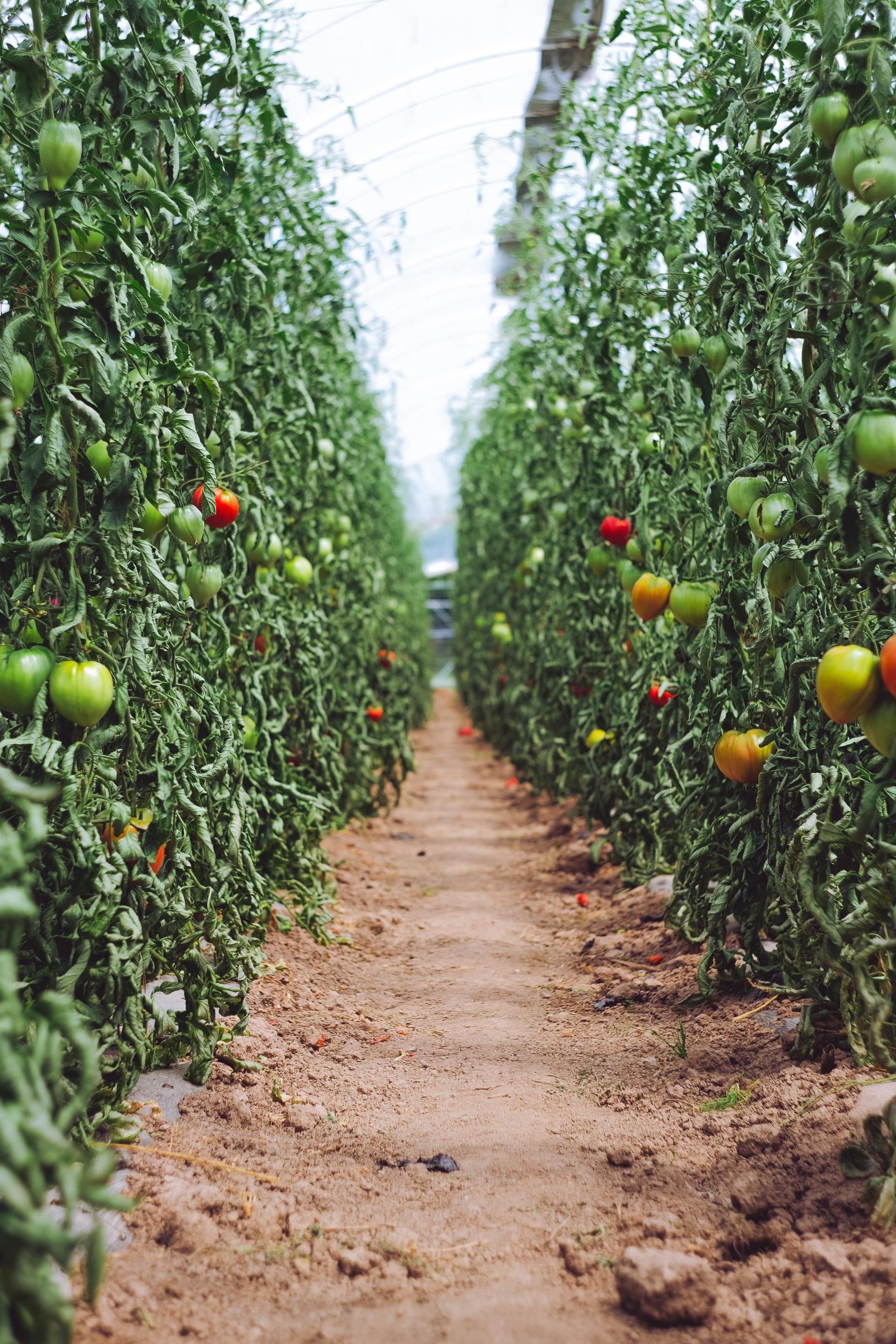
TOMATO
Nutritionists recommend consuming tomatoes because they are rich in lycopene, vitamins A and B complex, and important minerals such as phosphorus and potassium, as well as folic acid, calcium, and fructose. The riper the tomato, the higher the concentration of these nutrients.
Tomatoes are composed mainly of water, containing approximately fourteen calories per hundred grams. Some studies confirm their positive influence in cancer treatment, as lycopene, the pigment that gives tomatoes their color, is considered effective in preventing prostate cancer and strengthening the immune system.

How we produce our tomatoes
Learn about our production model.
Agricultural Planning
Input planning takes into account the expected production for each planting season, aiming to obtain the best cost/benefit ratio, and decisions about which hybrids will be planted are based on our research database and according to the biotechnologies identified as necessary for the production system.
Livestock farming
Preparation, sowing and management
The transplant system has the following advantages: lower seed consumption; shorter plant stay in the field; reduced irrigation and spraying costs; and reduced levels of early infection by Geminivirus and Tospovirus.
Military
Harvest
In most tomato cultivars, the fruits reach the harvest point 110 to 120 days after germination or 90 to 100 days after transplanting. Harvesting can be done manually or using a self-propelled harvester.
Corn
Processing and storage
It begins with the sorting process, then goes through cleaning, and after that they are sent for transport.
Button
Our
PRODUCTION
Discover our production